
If you are sourcing aluminum extrusion equipment or evaluating an aluminum extrusion press manufacturer, you’ll likely face the same claims from suppliers: “Our press is bigger, faster, and more automated.”
However, what truly dictates your 3-Year Total Cost of Ownership (TCO) comes down to four vital factors:
- Is your press tonnage accurately matched to your profile section?
- Are long-term operational energy costs controllable?
- Is your net recovery rate (yield) stable over time?
- Are unplanned machine downtimes preventable?
Here is an engineer’s guide to mastering aluminum extrusion line selection from a B2B buyer’s perspective.
1. Define Your Scope: Single Press Unit vs. Complete Turnkey Line
A common pitfall in extrusion projects is focusing solely on the main press while ignoring line integration. The aluminum extrusion press is the core driver, but your product quality and final output depend entirely on the synergy of the entire aluminum extrusion production line.
Before requesting supplier quotes, outline these two critical datasets:
Technical Parameters (Product Side)
- Cross-Section Profile: Circumference, maximum CCD (Circumscribed Circle Diameter), wall thickness range, and geometric complexity.
- Alloy Grade: Standard 6000-series (architectural/industrial) or hard 7000-series alloys (aerospace/automotive).
- Tolerance & Finish: Precision dimensional tolerances and surface quality requirements.
Commercial & Operational Parameters (Business Side)
- Capacity Goal: Monthly target (tons/month) or extruded billets/hour.
- Energy Redlines: Local electricity rates and target energy consumption per ton.
- Shift & Labor Plan: Automation requirements based on local operator skill levels.
💡 Procurement Tip: Compile your Profile Drawings + Alloy Grades + Tolerances + Monthly Target into a 1-page Product Requirement Document (PRD). Sending this to manufacturers forces them to submit precise engineering proposals instead of generic quotes.
Need a quick engineer review on your profile drawings?
📲 WhatsApp Us: +86 13929199984 (Send your CAD/PDF drawings for instant tonnage estimation)
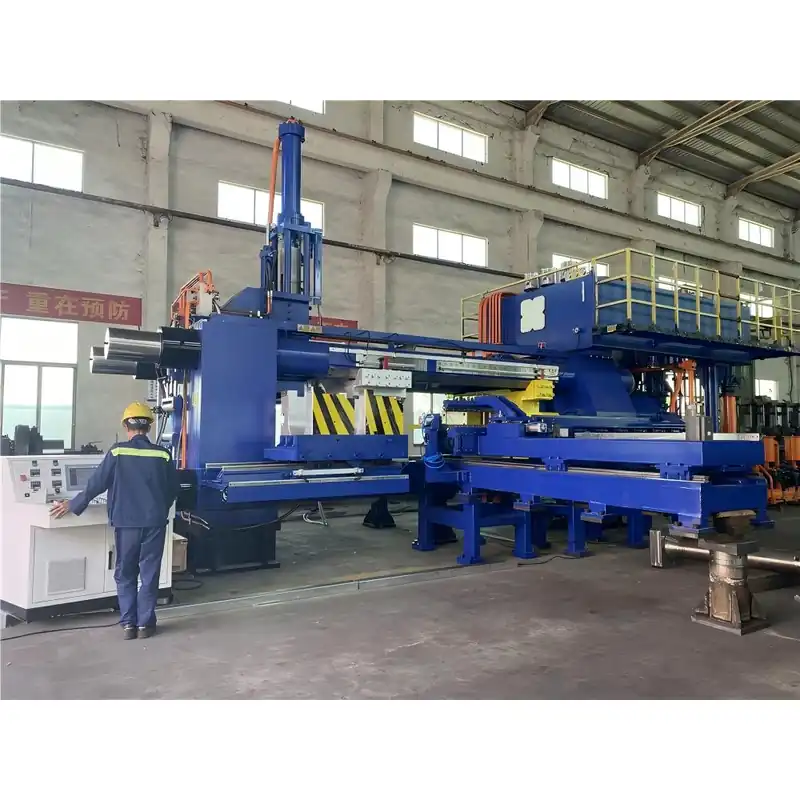
2. Avoiding the Tonnage Pitfall: How to Calculate Press Size Scientifically
Tonnage selection is where buyers waste the most capital. The industry sees two common extremes:
- Under-Sizing (Small Press, Big Job): Causes stalling, narrow processing windows, surface tearing, dimensional drift, and sky-high scrap rates.
- Over-Sizing (Big Press, Small Job): Leads to excessive initial Capex, unnecessary electricity consumption, high maintenance costs, and accelerated die wear.
Multi-Variable Balancing Rule
Never pick tonnage based on a single parameter. Evaluate these variables together:
- Projected Profile Area & Circumference: Larger sections require higher break-through and continuous pressures.
- Deformation Resistance: Hard alloys require extreme press rigidity and precision thermal control.
- Thin-Wall Profiles: Extremely thin walls demand high-response hydraulic stability to maintain constant extrusion speeds.
- Die Design & Friction: Tooling friction directly impacts required main cylinder pressure.
Supplier Evaluation Matrix
| Evaluation Dimension | Core Metrics to Audit | Procurement Verification Goal |
| Tonnage Calculation | Engineering basis for recommended tonnage range | Prevent suppliers from under-quoting tonnage to win on price |
| Extrusion Speed | Continuous stable speed range under full load | Reject unrealistic “no-load peak speeds” |
| Energy Consumption | kWh consumed per ton of finished extrusion | Estimate actual long-term operational expenditure (Opex) |
| Core Components | Hydraulic pump/valve brands, billet heating method, puller specs | Verify equipment lifespan and component availability |
3. Energy Efficiency & Yield Optimization: Saving Money in Daily Operations
In heavy industrial machinery, what is cheap to buy is often expensive to run. High-performance extrusion lines deliver value by remaining stable, energy-efficient, and low on scrap.
Power Breakdown & Energy Saving
- Main Hydraulic Drive: Traditional fixed-displacement pumps waste massive power during idling. Modern high-efficiency systems utilize Servo Hydraulic Control Systems, reducing energy consumption by over 30%.
- Billet Heating: Unevenly heated billets increase extrusion force spikes and scrap rates. Multi-zone energy-efficient heating furnaces are essential.
- Handling System Integration: Pullers, cooling beds, and stretchers must sync perfectly with the press to prevent press delay cycles.
Yield Improvement Strategy
Maximizing net recovery rate comes down to consistency:
- Thermal Stability: Minimal temperature variance between billet, container, and die ensures tight dimensional tolerances.
- Speed Stability: Smooth speed transitions eliminate surface defects and reduce front/rear scrap trimming.
- Automated Rhythm: Seamless material flow from extrusion to puller, cooling, stretching, and sawing cuts manual handling damage.
4. 2026 Smart Extrusion Technology: Closed-Loop Automation & Precision Tooling
In 2026, competitive advantage has shifted from brute force to repeatable processes, data traceability, and de-skilling operators. Modern automation relies on closed-loop dynamic control:
- Closed-Loop Parameter Control: Smart systems dynamically sync temperature, press speed, and hydraulic pressure. If a thermal drift is detected, the machine automatically adjusts speed to keep dimensions within strict tolerances.
- Die Management Integration: Digital die tracking connects maintenance history, service life, and real-time press tonnage logs—replacing guesswork with data-driven tool management.
5. Maintenance & Troubleshooting Protocol
Proactive maintenance safeguards your production schedule and preserves asset value:
- Pressure or Speed Drops: Inspect hydraulic oil temperature, check proportional valve response times, and verify main pump filtration.
- Profile Dimensional Drift: Check main press centerline alignment, container wear, die land condition, and puller tension synchronization.
- Surface Defect Spikes: Verify billet heater zone uniformity, log die nitriding cycles, and calibrate cooling fan/quench spray timing.
Get Your 2026 Customized Extrusion Line Solution
Selecting an aluminum extrusion line is an investment in long-term, predictable manufacturing capability. When finalizing contracts with manufacturers, ensure key Performance SLAs (Energy per ton, continuous output, and scrap limits) are explicitly guaranteed.
🛠️ Looking for an Engineering Evaluation or Machine Quote?
Whether you are expanding capacity, upgrading legacy machinery, or setting up a new extrusion plant, our engineering team provides tailored equipment layouts and tonnage calculations.
- Free CAD/PDF Drawing Review: Get exact tonnage & speed calculations for your profile designs.
- Energy ROI Calculations: Compare servo vs. traditional hydraulic running costs based on your local power rates.
- Complete Line Quotation: Itemized specifications for Press, Billet Heating, Quench, Puller, and Cooling Beds.
📲 Direct WhatsApp Support (Fastest Response):
- WhatsApp: +86 13929199984 (Click to chat — send your drawings or project requirements directly to our senior engineers)
- Phone / WeChat: +86 13929199984
🌐 Explore Our Machinery & Global Installations:
- Official Website: www.yuelead.com (Watch 600T–5000T extrusion lines in action)